All articles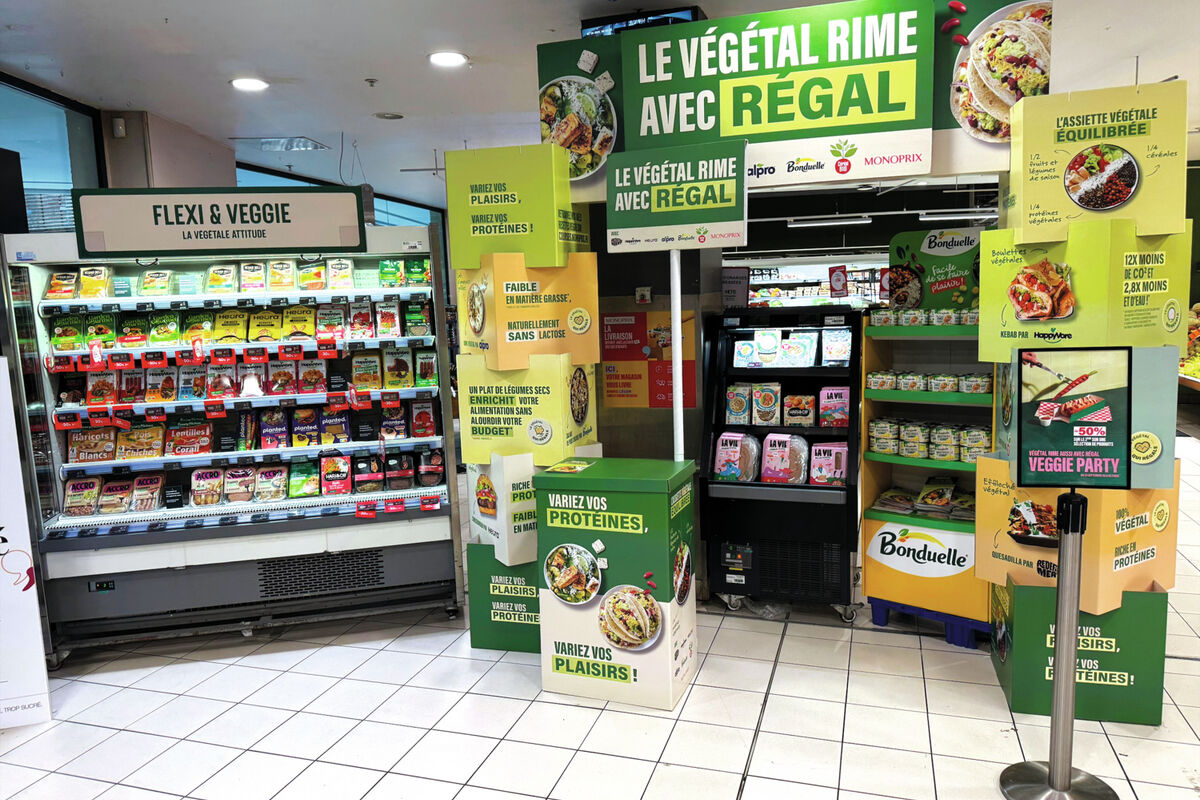
Retail
E-Commerce, Promotions, Placement: Which Levers Should Retailers Test First to Improve Their Protein Ratio?
By Altera Food Initiative
Retail
Once a retailer has calculated its protein ratio, the next question is practical.
What should we do with it?
A protein ratio can show the balance between plant-based and animal-based protein sales. It can reveal which categories drive the current result. It can help ESG teams understand the gap between ambition and reality.
But the ratio itself does not change anything.
It becomes useful only when it guides action.
For retailers, the challenge is to identify which levers can improve the ratio without creating unnecessary commercial risk. The answer will vary by retailer, category, store format, and customer base.
Some levers are especially important to test first: e-commerce, promotions, placement, pricing, assortment, and private label.
The goal is not to change everything at once. The goal is to learn which interventions actually shift sales from animal-based to plant-based or plant-forward options, and which ones only create the appearance of progress.
Retailers often ask how they can sell more plant-based products.
That is a useful question, but it is not enough.
A better question is: which actions improve the overall protein ratio?
This distinction matters.
A retailer can increase plant-based sales without reducing animal-protein sales. In that case, the plant-based category is growing, but real substitution may be limited.
If the objective is to improve the protein ratio, each intervention should be measured against both sides of the equation.
Did plant-based sales increase? Did animal-protein sales decrease or rebalance? Did the category remain commercially healthy? Did the intervention create substitution, or only incremental sales?
This is why test design matters. Retailers should not only track uplift in plant-based products. They should also track the effect on animal-based products in the same category, store, online journey, or shopping basket.
A good protein-shift test is not only a sales test. It is a substitution test.
Protein shift is complex.
Consumers behave differently across categories. The barriers to plant-based adoption are not the same in dairy, meat, ready meals, frozen food, sandwiches, or e-commerce. A lever that works in one category may fail in another.
This is why retailers should use a test-and-learn approach.
Testing helps answer practical questions. Which categories respond to price changes? Where does shelf placement matter? Which promotions encourage trial? Which e-commerce recommendations change baskets? Which private-label products can scale? Which actions improve the ratio without damaging revenue or margin?
Testing also reduces internal resistance.
Commercial teams are more likely to support a pilot than a broad mandate. Leadership is more likely to approve scaling when the evidence is clear. ESG teams gain a more credible story because they can connect progress to specific actions.
The best approach is to start with a few targeted pilots, measure carefully, and scale what works.
E-commerce is one of the most attractive places to start.
Online grocery creates many moments where retailers influence choice. Search results, product recommendations, filters, substitutions, recipe pages, and basket prompts all affect what customers see and consider.
Small digital changes can reach many shoppers quickly.
If a customer searches for "burgers," does the retailer show plant-based or hybrid options? If someone adds beef mince to their basket, are plant-forward alternatives suggested? If a shopper browses ready meals, are plant-based options visible? If a dairy product is out of stock, what replacement is proposed?
These decisions shape the digital shelf.
E-commerce is also easier to test than many in-store interventions. Retailers can run A/B tests on search ranking, recommendation modules, product labels, recipe bundles, or homepage placements. They can compare customer groups, track baskets, and measure conversion.
This makes e-commerce a strong first lever.
It is relatively low-risk. It can be tested quickly. It does not require changing store layouts. It can also generate useful data on customer behaviour.
The key is to measure substitution.
A successful e-commerce test should not only show more clicks or more plant-based sales. It should show whether the basket changed. Did customers replace animal-based products? Did the share of plant-based protein increase? Did basket value remain stable?
For many retailers, e-commerce should be the first testing ground for protein-ratio improvement.
Promotions are one of the strongest tools retailers use to influence demand.
They shape what customers notice, what feels like good value, and what ends up in the basket.
This makes them highly relevant to the protein ratio.
If a retailer heavily promotes animal-based products while giving limited support to plant-based or plant-forward options, the promotional strategy may reinforce the current ratio.
This does not mean retailers should immediately stop all meat or dairy promotions. That may be commercially unrealistic and could create backlash.
But retailers should at least analyse the promotional mix.
They should ask what share of protein-related promotions supports animal-based products, what share supports plant-based products, which categories receive the deepest discounts, whether promotions encourage trial of plant-forward options, and whether they increase substitution or simply add more products to the basket.
This analysis often reveals a gap between ESG ambition and commercial practice.
A retailer may have a protein-shift target while still using promotions that push sales in the opposite direction.
The right starting point is not necessarily a radical change. It can be a controlled test.
For example, a retailer can increase promotional support for plant-based ready meals in selected stores. It can test meal deals that include legumes or plant-forward products. It can reduce the promotional price gap between animal and plant-based equivalents. It can compare different promotion mechanics to see which ones create repeat purchase.
The important point is to measure the whole category.
A promotion that increases plant-based sales but also increases total category volume may not improve the protein ratio. A promotion that shifts sales from animal-based to plant-forward products is more valuable.
Promotions should be treated as a lever for substitution, not only for volume.
Placement is another obvious lever.
If plant-based products are placed in a separate section, they may be easy for existing plant-based consumers to find. But they may be invisible to mainstream shoppers choosing between meal options.
Integrated placement can reduce this barrier.
Placing plant-based alternatives next to animal-based equivalents makes comparison easier. It can make plant-based options feel more normal. It can increase visibility at the moment of decision.
There is evidence that this can increase sales of meat-free products.
A UK supermarket study published in PLOS Medicine tested the effect of moving meat-free products into the meat aisle across 20 intervention stores and 88 matched control stores. The study found that meat-free sales increased significantly more in intervention stores than in control stores. However, it did not find a significant reduction in meat sales.
This result is important.
Placement can increase plant-based sales. But placement alone may not be enough to create substitution.
For retailers, this means placement should be tested as part of a broader strategy.
Integrated placement may work better when combined with price support, promotions, clear signage, meal inspiration, or improved product quality. A plant-based product placed next to an animal equivalent still needs to be appealing, affordable, and easy to understand.
The best test is not simply whether plant-based sales increased. It is whether the category protein ratio improved.
That means measuring both plant-based and animal-based sales before, during, and after the intervention.
Placement is a high-priority lever, but it should not be treated as a single solution.
Price is one of the biggest barriers to plant-based adoption.
If plant-based products are significantly more expensive than animal-based equivalents, many customers will not switch. This is especially true in mainstream retail, where price perception is central.
Pricing should therefore be one of the first levers retailers test.
A price test can be simple. A retailer can select a few comparable animal-based and plant-based products, reduce the price gap for a defined period, and measure what happens. The test should track plant-based sales, animal-protein sales, category revenue, margin, and repeat purchase.
Lidl Germany provides a useful example. In 2023, Lidl aligned the prices of many products in its Vemondo plant-based private-label range with comparable animal-based products. ProVeg Germany later reported that the Vemondo range recorded more than 30% sales growth after price alignment and integrated placement.
This does not prove that price parity alone caused the full increase. Placement, product visibility, and wider category strategy also mattered.
But it shows why pricing deserves serious attention.
For retailers, the practical question is not whether every plant-based product should immediately reach price parity. The question is where the price gap is most likely to block substitution.
High-potential categories include mince, burgers, sausages, dairy alternatives, yoghurts, ready meals, sandwiches, and food-to-go.
Price tests should be designed carefully. A retailer needs to understand whether the intervention improves the ratio and whether the commercial performance remains acceptable.
The objective is not simply cheaper plant-based products. The objective is to remove price barriers where they prevent customers from switching.
Assortment is the foundation.
Consumers cannot choose products that are not available.
But assortment expansion should be strategic. Adding more plant-based SKUs is not automatically the same as improving the protein ratio.
A retailer should not only ask whether it has enough plant-based products. It should ask whether it has the right products in the categories that can move the ratio.
This requires category-level analysis.
A niche innovation may receive attention but sell in low volumes. A simple plant-forward ready meal in a high-volume category may have more impact. Legumes, tofu, dairy alternatives, or plant-based private-label products may matter more than a small premium meat-alternative launch.
Retailers should identify the categories where animal-protein sales are high, plant-based or plant-forward alternatives are credible, consumer acceptance is realistic, product quality is strong enough, price points can work, and substitution can be measured.
Assortment work should also include range architecture.
Are plant-based options available at entry-level, mainstream, and premium price points? Are there private-label options? Are products available in family formats? Are meal occasions covered? Are there enough familiar recipes?
Assortment is not only about product count. It is about building a range that can compete.
Private label is one of the strongest levers retailers control directly.
With national brands, retailers depend on supplier innovation, pricing, and marketing. With private label, they can shape the product more actively.
This matters for protein shift.
Private label can help retailers improve affordability, quality, recipe design, and category coverage. It can also help develop plant-forward products that fit mainstream habits.
A retailer can use private label to create affordable plant-based alternatives, plant-forward ready meals, hybrid products, better dairy alternatives, legume-based meal solutions, reformulated products with lower animal-protein content, family-friendly formats, and products aligned with local tastes.
Private label is especially useful when the market does not yet offer the right products.
In some categories, fully plant-based alternatives may not be ready for mainstream adoption. In those cases, plant-forward or hybrid products can act as a bridge.
This should not be seen as a compromise without value. If a hybrid or plant-forward product reduces animal-protein content while maintaining consumer acceptance, it can help improve the ratio at scale.
The key is to measure the effect.
Does the private-label product create substitution? Does it improve the category protein ratio? Does it attract repeat purchase? Does it maintain margin and customer satisfaction?
Private label gives retailers the ability to build the market, not only react to it.
There is no universal answer.
The best first lever depends on the retailer's data, category structure, commercial priorities, and customer base.
But a practical sequence is possible.
Retailers should usually start with the levers that are easiest to test, lowest risk, and most measurable.
E-commerce often comes first because it allows fast experimentation. Search results, recommendations, and digital merchandising can be tested without changing physical stores.
Promotions and pricing come next because they directly influence demand and can be tested over defined periods.
Placement should be tested in selected stores or categories, ideally with proper control groups.
Assortment and private label are more strategic. They can have a large impact, but they often require longer development cycles.
A useful prioritisation framework is:
1. Low effort, high learning: e-commerce, digital recommendations, and online search tests.
2. Medium effort, high commercial relevance: promotions, price-gap tests, and placement pilots.
3. Higher effort, long-term impact: assortment redesign, private-label innovation, and reformulation.
Retailers should not wait for the perfect full strategy before testing. They should start where they can learn quickly.
The most common mistake in protein-shift pilots is measuring only plant-based uplift.
That is not enough.
A test should measure several outcomes at the same time.
First, it should measure plant-based sales. Did the intervention increase demand?
Second, it should measure animal-protein sales. Did customers switch, or did they simply add extra products?
Third, it should measure the category protein ratio. Did the balance between plant and animal protein improve?
Fourth, it should measure commercial performance. What happened to revenue, margin, basket size, and repeat purchase?
Fifth, it should measure customer response. Were there complaints, positive feedback, repeat purchases, or changes in loyalty behaviour?
This matters because some interventions may look successful at first glance but fail to improve the ratio.
For example, a plant-based promotion may increase sales of the promoted product but have no effect on animal-based sales. A placement change may increase visibility but not create substitution. A price cut may improve volume but weaken margin too much.
The goal is not to find the lever that creates the biggest headline uplift. The goal is to find the levers that improve the ratio while remaining commercially realistic.
Retailers should design tests with control groups whenever possible.
This makes the results more credible.
If a retailer changes placement in 20 stores, it should compare the results with similar stores where placement did not change. If it adjusts online recommendations for one customer group, it should compare them with a control group. If it runs a price-parity test in one region, it should compare results with another region.
Without a control group, it is difficult to know whether the intervention caused the change.
Sales may have moved because of seasonality, competitor activity, weather, media coverage, inflation, holidays, or product availability.
Control groups do not need to make the process overly academic. But they help retailers avoid false conclusions.
This is especially important if the results will inform a larger rollout.
A small test with good design is more useful than a large test with unclear results.
Retailers should avoid assuming that one lever will solve the problem.
Protein shift is rarely driven by one intervention.
Placement may increase visibility but not substitution. Price may increase trial but reduce margin if badly designed. Promotions may create short-term uplift without repeat purchase. E-commerce recommendations may work for some customers but not others. Private-label innovation may succeed in one category and fail in another.
This is why the best approach is to build combinations.
For example: placement plus price support, promotion plus meal inspiration, e-commerce recommendations plus recipe bundles, private-label innovation plus integrated merchandising, or assortment expansion plus category-level targets.
The protein ratio can help compare these combinations.
Retailers should treat each test as evidence, not as a final answer.
Retailers should use the protein ratio to prioritise action, not only to report progress.
The best starting point is to identify the categories that matter most, then test the levers that are easiest to measure and most likely to create substitution.
A practical first wave of pilots could include:
1. An e-commerce test showing plant-based or plant-forward alternatives in search results and recommendations.
2. A promotional test that gives stronger support to plant-based products in a high-impact category.
3. A placement test that integrates plant-based alternatives next to animal equivalents.
4. A price-gap test in one or two categories where affordability is a clear barrier.
5. A private-label review to identify where plant-forward products could improve the ratio at scale.
Each test should measure both plant-based growth and animal-protein movement.
This is the discipline that turns protein shift from a communications topic into a commercial learning system.
Improving the protein ratio is not only about adding more plant-based products. It is about changing what customers actually buy.
Retailers already control many of the levers that shape purchasing behaviour: e-commerce, promotions, placement, pricing, assortment, and private label.
The challenge is to use these levers deliberately.
Start with the categories that matter. Test actions before scaling. Measure substitution, not only uplift. Protect commercial performance. Learn quickly. Improve the method over time.
The protein transition will not be delivered by one big campaign. It will be delivered by many practical retail decisions, tested and improved year after year.
The best question is not which lever looks most sustainable. It is which lever actually moves the protein ratio.
ProVeg International, Why protein diversification belongs on every retailer's agenda https://proveg.org/article/why-protein-diversification-belongs-on-every-retailers-agenda/ This source explains why protein diversification should be embedded across buying, category management, marketing, and strategy, and identifies levers such as pricing, promotions, placement, product development, and reformulation.
ProVeg International, Rebalancing protein sales https://proveg.org/article/rebalancing-protein-sales/ This source explains why retailers should measure animal- and plant-based protein sales, set baselines, and connect targets to practical interventions.
PLOS Medicine, Estimating the effect of moving meat-free products to the meat aisle on sales of meat and meat-free products https://journals.plos.org/plosmedicine/article?id=10.1371/journal.pmed.1003715 This study tested the effect of moving meat-free products into the meat aisle in a UK supermarket chain. It found increased sales of meat-free products, but no significant reduction in meat sales.
ProVeg Germany, Lidl private-label plant-based range records more than 30% sales increase after price alignment https://proveg.org/de/presse/pflanzliche-alternativen-lidl-eigenmarke-verzeichnet-ueber-30-mehr-absatz This source reports that Lidl's Vemondo plant-based private-label range recorded more than 30% sales growth after price alignment with comparable animal-based products and integrated shelf placement.
World Resources Institute, The Food Service Playbook for Promoting Sustainable Food Choices https://www.wri.org/research/food-service-playbook-promoting-sustainable-food-choices This source summarises behavioural strategies for increasing demand for plant-rich dishes, including price, placement, promotion, presentation, product, and people.
IGD, Healthy, sustainable diets: Driving change https://www.igd.com/Social-Impact/Health/Reports/Healthy-sustainable-diets-Driving-change/35613 This source presents real-world retail trials showing how pricing and in-store interventions can influence healthier and more sustainable purchasing behaviour.
WWF, Planet-Based Diets: Business Solutions for Retailers https://planetbaseddiets.panda.org/retailers This source outlines WWF's retailer methodology for measuring animal- versus plant-based sales and supporting the shift toward planet-based diets.
Read also
Methodology
A retailer's protein ratio is the share of plant protein in all the protein it sells over a year. For each product, you multiply sales by net weight and by protein content, then add everything up. On the fictional six-product basket used here, the result is 44%, and three calculation choices are enough to move it by 2 to 12 points.
ReadMethodology
For food retailers, the protein transition is moving from ambition to implementation. Supermarkets are starting to set targets for plant-based sales, Scope 3 emissions, healthier diets, and lower-impact food baskets. The harder question…
Read