All articles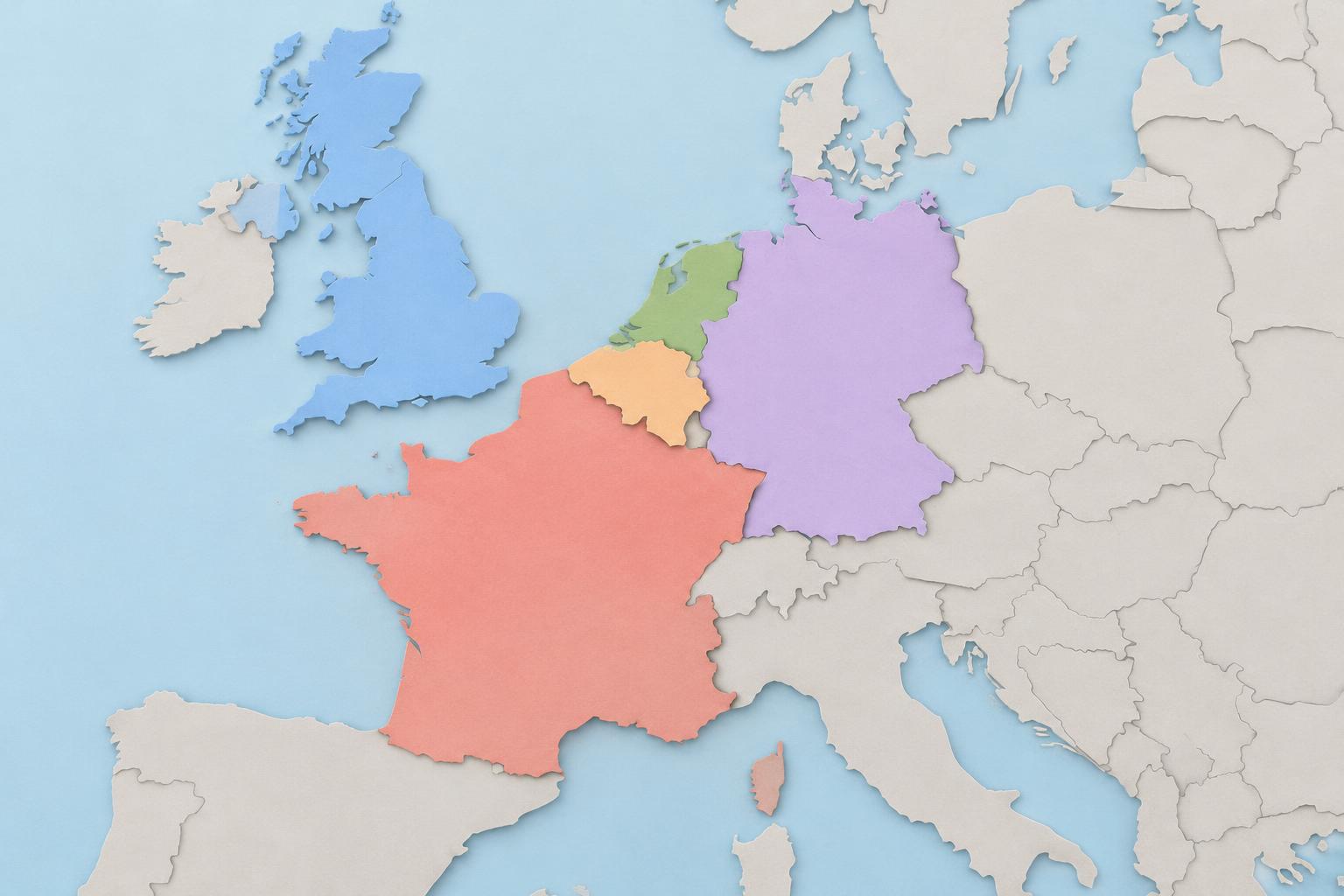
Benchmark
Protein Ratio: Where Do European Retailers Stand in 2026?
By Romain Balès and Dexter Oelrichs
Benchmark
In 2026, the Netherlands is still the only country where the entire grocery retail sector measures and publishes its protein ratio: 42.6% plant protein in 2025, against a collective target of 60% by 2030. Elsewhere in Europe, a handful of retailers publish a figure, using methods that do not measure the same thing. Here is where things stand, country by country, and how to read the figures.
This table brings together the figures and targets published by European retailers as of 4 September 2026. It only includes public data, cited at the end of the article.
| Country | Retailer | Method | Latest published figure | What the figure measures | Published target |
|---|---|---|---|---|---|
| Netherlands | 13 retailers, around 95% of the market | Protein Tracker | 42.6% (2025) | Plant share of protein sold | 60% by 2030 |
| Belgium | Carrefour Belgium | Protein Tracker | 42.2% (2026) | Plant share of protein sold | Not specified |
| Germany | REWE and PENNY | Based on WWF | 54% (2024) | Plant share of purchased volumes, across the whole range excluding drinks | 60% by 2035 |
| Germany | Lidl | WWF | Around 11% (starting point, 2022) | Plant share of protein sources, excluding dairy | 20% by 2030 |
| United Kingdom | Lidl GB | WWF | Not published | Plant share of protein sales | 25% by 2030 |
| France | Lidl France | WWF | 15% (2024) | Plant share of protein sources | 20% by 2030 |
Behind the same words, "plant share", retailers publish at least three different measures.
1. The plant share of protein sold. This is the Protein Tracker measure: it counts the protein contained in every food product sold. Dutch supermarkets and Carrefour Belgium use it.
2. The plant share of protein sources. This is the main measure in the WWF methodology: it counts tonnes of product, only among meat, fish, eggs, pulses, nuts and alternatives. Dairy is tracked separately. This is the figure Lidl publishes.
3. The plant share of the whole range, by volume. It counts tonnes of product across every aisle, fruit, vegetables and grains included. This is the figure REWE and PENNY publish in Germany.
A 15% at one retailer and a 54% at another therefore say nothing about which one is further ahead. Before any comparison, check the method, what the figure measures and the scope it covers. We explain the differences between the two methodologies in Protein Tracker vs WWF Methodology: Which Approach Should Retailers Use to Measure the Protein Shift?, and how we calculate each one in How Altera Calculates Your Protein Ratio, Step by Step.
The Netherlands is the only country where the whole grocery retail sector measures its protein ratio with the same method and publishes the result every year.
The Protein Tracker was developed by the Green Protein Alliance and ProVeg Netherlands, together with Dutch supermarkets, the Questionmark Foundation and Natuur & Milieu. Its third national assessment, published in March 2026, covers 13 retailers representing around 95% of the market.
The results show a plateau:
- 42.0% plant protein in 2023;
- 42.7% in 2024;
- 42.6% in 2025.
The intermediate target of 50% by 2025 was not met. The collective target remains 60% by 2030. Two specialist retailers, Ekoplaza and Odin, had already reached 60% in 2024 and now aim for 70%.
Each retailer states the data level it used. Level A relies on the actual split of protein in composite products; Level B applies a 50% plant, 50% animal convention. The report also states the share of sales covered: Albert Heijn, for example, calculated its 2025 ratio at Level B, on 77% of its volumes.
The report draws a clear lesson: a single retailer has limited room to act without losing market share, and a collective approach is becoming necessary.
In Belgium, momentum comes mainly from Flanders, which aims for around 60% of the protein eaten by Flemish people to come from plant sources by 2030. According to the latest Green Deal Eiwitshift figures, the Flemish average stood at around 42.6% in 2024. Wallonia is also backing plant protein through its Protewin strategy, without setting a figure.
Two retailers have taken public positions:
- Carrefour Belgium presents itself as the first Belgian retailer to measure and publish its ratio: 42.2% plant protein, calculated with the Protein Tracker.
- Colruyt has set a target of 60% plant protein by 2028.
In Germany, the two largest public efforts are both based on the WWF methodology, but not on the same scope.
Lidl was the first German retailer to set a protein ratio target. It aims for 20% plant protein sources by 2030 (base year 2022), against around 11% when its strategy was launched. Plant protein sources include pulses, nuts, seeds and plant-based alternatives to meat, eggs and fish. Dairy alternatives have their own target: 10% by 2030. Lidl has published its ratio every year since 2023.
REWE and PENNY measured for the first time in 2024, based on the WWF methodology, the plant share of purchased volumes across their whole range excluding drinks: 54%. The target is 60% by 2035. The group is calling for the whole sector to adopt the updated WWF methodology, so that measurement is consistent.
According to the Superlist Germany 2025 ranking, Kaufland also publishes figures using the WWF methodology, while Aldi Süd uses an in-house method.
The United Kingdom has opted for a shared method. For the 2024 reporting period, nine retailers representing over 80% of the major UK supermarkets adopted the WWF methodology to report on their sales of protein-source foods. They include Tesco, Sainsbury's, Waitrose, Co-op, M&S, Lidl and Aldi.
Lidl GB is the first UK retailer to set a figure: 25% of its protein sales from plant sources by 2030.
In France, two thirds of the protein people eat comes from animal sources, according to a French Senate report. Yet very few retailers publish their ratio.
- Lidl France is, to our knowledge, the only French retailer to publish both a ratio and a target: 15% plant protein and 85% animal protein in 2024, under the WWF methodology, with a target of 20% by 2030. The Lidl group has also committed to increasing the share of plant-based foods sold across its 31 countries by 20% by 2030, compared with 2023.
- Carrefour has chosen a sales target rather than a ratio: 500 million euros of sales of plant-protein products by 2026, pursued with seven manufacturers.
The topic is moving, but publishing a ratio is still the exception in France.
60/40 has become the common horizon. Dutch supermarkets, Flanders and Colruyt all aim for 60% plant protein. WWF also recommends a 60/40 target for protein-source foods. But the figure does not mean the same thing under each method: 60% of protein sold is not the same as 60% of the tonnes of protein sources.
Where retailers measure, progress is slow. In the Netherlands, the national ratio has barely moved in three years. Measurement alone is not enough: it makes the gap between ambition and sales visible, which is exactly its value.
There is no common European measure yet. The Protein Tracker dominates in the Netherlands and is gaining ground in Belgium; the WWF methodology prevails in the United Kingdom and Germany, with variations in scope. As long as methods coexist, every published figure needs to say how it was calculated.
Publishing is about to become more demanding. From 27 September 2026, EU Directive 2024/825, known as EmpCo, tightens the rules on environmental claims. A ratio shown to consumers will need to be clear, specific and verifiable, which means explaining what it measures and how it is calculated.
There is no European average. The only published national figure is the Dutch one: 42.6% plant protein in 2025, under the Protein Tracker.
As of 4 September 2026: the 13 Dutch retailers assessed by the Protein Tracker, Carrefour Belgium, REWE and PENNY in Germany, Lidl in several countries including Germany and France, and Kaufland. In the United Kingdom, nine retailers report their sales of protein-source foods under the WWF methodology.
Because they do not measure the same thing. Lidl publishes the plant share of protein sources; REWE publishes the plant share of its whole range by volume, fruit, vegetables and grains included.
60/40 is the common reference, but a retailer first needs to choose its method and know its starting point. We explain why in Why Retailers Should Calculate Their Protein Ratio Before Setting a Public Target.
Europe is moving at different speeds: one country measures its whole sector, a few retailers publish elsewhere, and the figures on display rest on different methods. For a retailer getting started, the first step is to know its own ratio, under both methods, and to know exactly what each figure measures.
Altera Food Initiative calculates retailers' protein ratios free of charge, under the Protein Tracker and the WWF methodology, and states what each figure measures. Discover the tool · Contact us
Green Protein Alliance and ProVeg Netherlands, The Protein Tracker: National Supermarket Protein Split 2025, March 2026.
RetailDetail, Carrefour Belgium shares its progress on the protein shift, 15 July 2026.
Green Queen, Belgium's Supermarkets Are the Latest to Champion Blended Meat, September 2025 (Colruyt's target).
https://www.greenqueen.com.hk/blended-meat-hybrid-beef-vlees-belgium-colruyt-lidl/
Lidl Deutschland, Pflanzenbasiertes Sortiment (2030 protein target).
top agrar, interview with Christoph Graf (Lidl), starting point of the protein strategy.
REWE Group, Proteinstrategie der REWE Group, position paper, July 2025.
https://www.rewe-group.com/content/uploads/2025/08/proteinstrategie-positionspapier.pdf
Lebensmittel Fortschritt, Superlist Umwelt Deutschland 2025.
https://lebensmittel-fortschritt.de/aktuell/superlist-umwelt-2025
Food Service Footprint, More food retailers must set 60% plant protein targets, say NGOs, October 2024 (nine UK retailers).
https://foodservicefootprint.com/more-food-retailers-must-set-60-plant-protein-targets-say-ngos
vegconomist, Retailers Urged to Adopt 60/40 Protein Split, October 2024 (WWF methodology in the UK).
The Plant Base, Lidl triples UK plant-based range, October 2024 (Lidl GB's target).
Lidl France, Une alimentation saine et durable.
Terre-net, Carrefour mise sur les protéines végétales, 2024.
https://www.terre-net.fr/agroalimentaire/article/844461/carrefour-mise-sur-les-proteines-vegetales
French Senate, information report Protéines et alimentation, 2025.
https://www.senat.fr/rap/r24-708/r24-7080.html
WWF, WWF launches new methodology to support retailers in achieving 60% of protein food sales from plant-based sources, October 2024.
Read also
Retail
When it comes to plant protein, conversations with retailers often run into the same certainties: customers do not want it, it costs more, meat would have to come off the shelves. The figures say something else, and sometimes the opposite of what you would expect. Here are seven misconceptions, checked against public data.
ReadStrategy
The EU's EmpCo Directive applies from 27 September 2026 and sets stricter rules for environmental claims made to consumers. A protein ratio shown in store, on a website or in a campaign can be one of them. It can still be published, provided it is precise, explained and verifiable. Here is what the text says, where France stands, and our rules for publishing safely.
Read